Project overview
The China Biographical Database (CBDB) is a person-centered relational database that records native place and address, paths into office, official careers, and kinship and social relations for historical figures across Chinese history. The project site is at Harvard University (cbdb.hsites.harvard.edu); the list of partner institutions was not verified one by one for this article. On GitHub, cbdb-project/cbdb_sqlite is the SQLite standalone release entry: the repository itself no longer holds the latest large database; instead the README and latest.json point to data packages on Hugging Face, with optional post-processing scripts. As seen on the verification date 2026-10-28 (Beijing time), this article describes the division of labor among those locations, download and checksum steps, post-processing scripts, and licensing boundaries; full import and script runs were not tested.
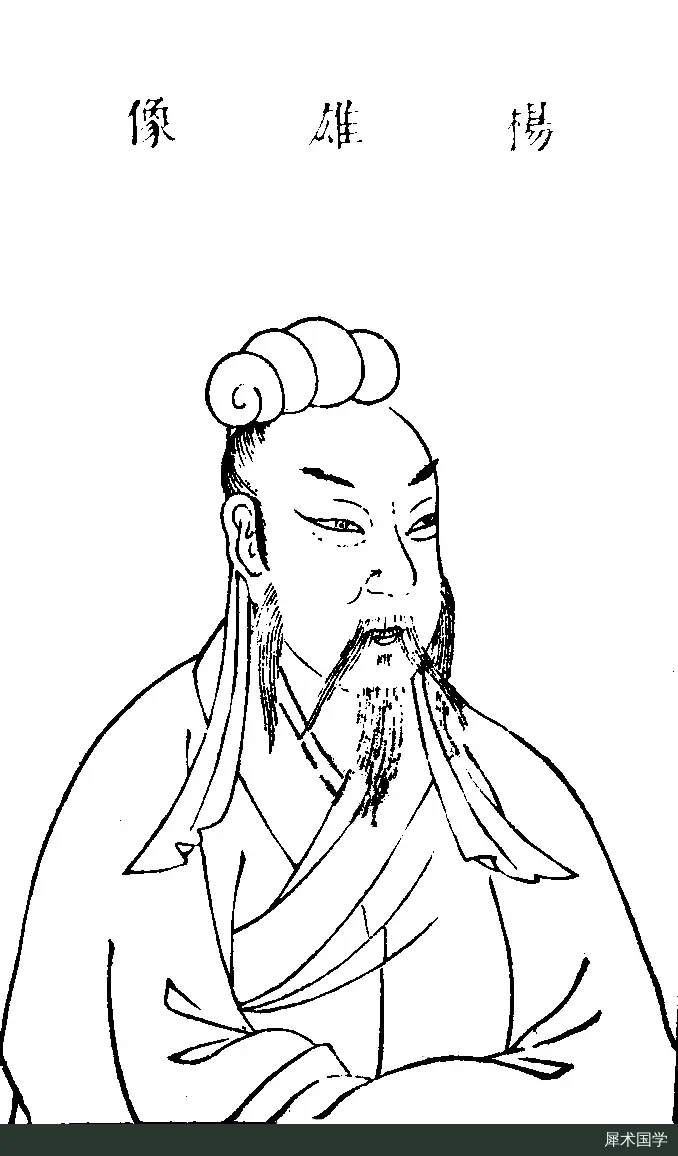
Portrait of Yang Xiong, a woodcut figure print from the Ming encyclopedia Sancai tuhui compiled by Wang Qi and others. Image source: Wikimedia Commons (photographed from a copy in the University of British Columbia Asian Library); license: public domain.
Division of labor among project site, release repo, and dataset
When taking CBDB standalone data one meets three places, each handling a segment:
- Project site (cbdb.hsites.harvard.edu): releases the MS Access standalone edition and the data licensing terms. After excerpts from the standalone download page, the current standalone edition is CBDB_BJ_20260602, covering 649,533 persons; the page notes that the academic branch (CC BY-NC-SA 4.0) publishes new data about a year later than the commercial branch, and that this edition adds no new persons relative to CBDB_bi_20250520. Direct connection from this machine returned 403; the above was read via search-engine excerpts, and home-page access was not stably verified.
- GitHub release repo cbdb-project/cbdb_sqlite: pointers and tools only. The README states that database files in the repo are no longer updated; latest.json records the current release date, filename, SHA-256, and direct link; scripts/ holds post-processing scripts. Commit history shows latest.json is auto-synced from Hugging Face by GitHub Actions about once a week; the latest sync was at 2026-10-24T19:16:25Z.
- Hugging Face dataset cbdb/cbdb-sqlite: the actual files, including the latest package latest.zip and monthly archives under history/. The dataset page shows a total file size of 7.26 GB, the sum of all historical versions; the size of a single latest package was not verified.
The same organization also has the online entry system source repo cbdb-online-main-server, which has no direct relation to the standalone SQLite discussed here and is not covered further.
Download and SHA-256 verification
latest.json as seen on the verification date:
| Field | Value |
|---|---|
| sqlite_filename | cbdb_20261024.sqlite3 |
| generated_at_utc | 2026-10-24T19:14:57Z |
| huggingface_path | history/cbdb_202610/cbdb_20261024.zip |
| sha256 | 45946f65fa41708429d1075b78915e6fb84ec806c0a372c3a3110a63f25f416d |
Steps to obtain:
- Read latest.json first, note the filename, generation time, and SHA-256. These change with every release; use what you read on the day of download.
- Choose a download link. The README’s latest.zip always points to the newest package; the huggingface_url in latest.json points to a dated archive (e.g. cbdb_20261024.zip). To name a version in a paper or notes and reproduce later, the dated file is safer.
- Verify SHA-256. On Linux use
sha256sum, on macOSshasum -a 256, on Windowscertutil -hashfile filename SHA256. latest.json does not say whether the hash is of the zip or of the unzipped .sqlite3; compute both and compare; if neither matches, re-download. - Unzip and open. Use the sqlite3 CLI or any SQLite GUI. The README sample writes the database as latest.db; in practice substitute the filename you unzipped.
sha256sum cbdb_20261024.zip
unzip cbdb_20261024.zip
sha256sum cbdb_20261024.sqlite3
The unzipped filename should match sqlite_filename.
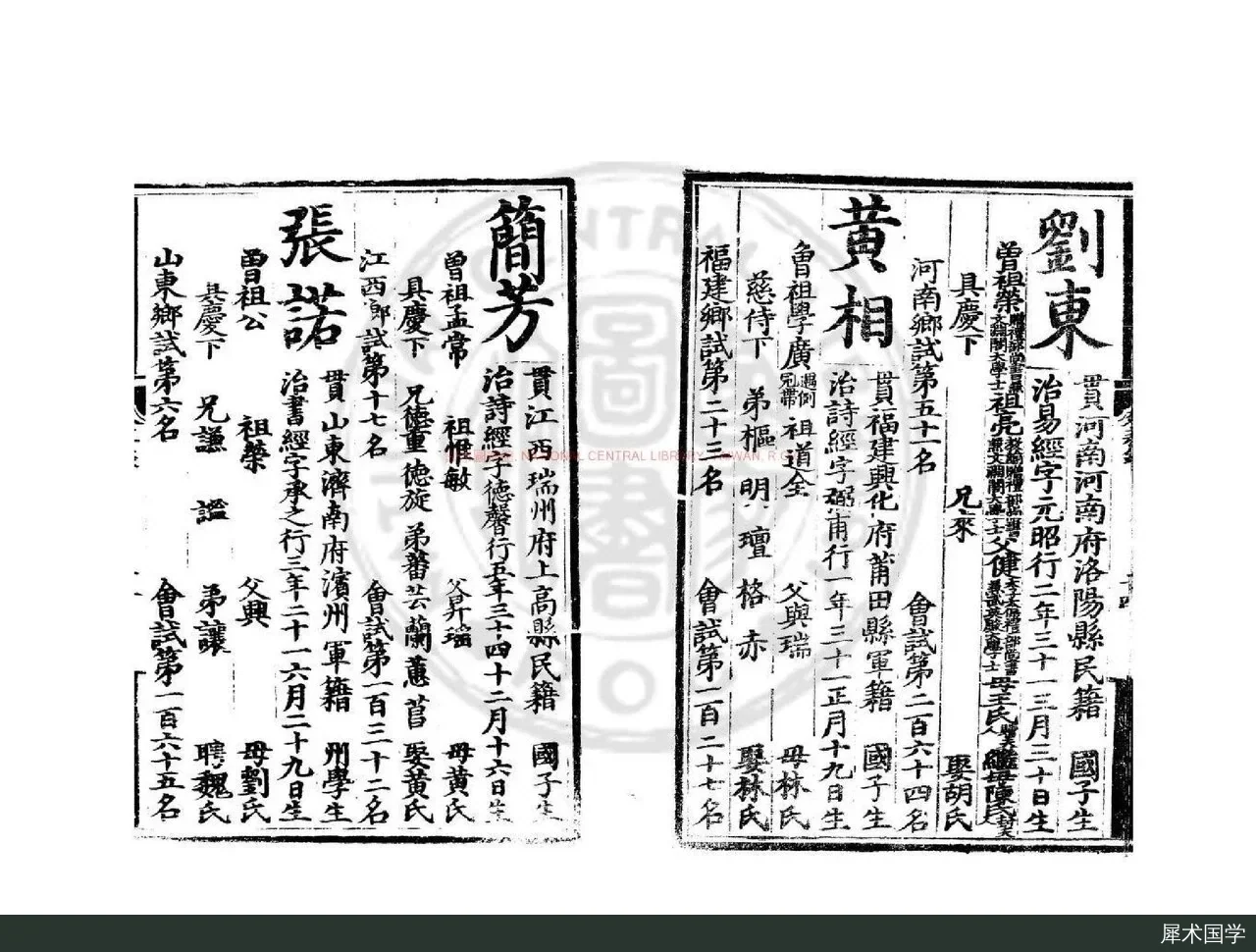
Book image of the Hongzhi ninth-year jinshi dengke lu (Ming Hongzhi imprint, scan p. 30). Jinshi registers record names, native places, and family backgrounds for one examination cohort and are one traditional source for entry-into-office data. Image source: Wikimedia Commons, scan of a National Central Library (Taiwan) holding; license: public domain.
Optional post-processing scripts
The README explains that the raw export lacks convenience views and an expanded ADDRESSES table; when needed, use scripts under scripts/:
| What you need | How |
|---|---|
| Do everything at once | Colab notebook scripts/setup_cbdb.ipynb: download the latest DB, add foreign keys, create views, create the ADDRESSES table; each step can be toggled in the Configuration cell |
| Foreign-key constraints | python scripts/add_foreign_keys.py --db latest.db |
| 18 convenience views | bash scripts/create_views.sh latest.db |
| ADDRESSES hierarchy table | python scripts/create_addresses_table.py --db latest.db |
Details:
- Views include
View_PeopleData,View_EntryData,View_PostingOfficeData, and others for common queries on persons, entry into office, and appointments. create_addresses_table.pyresolves each address’s full administrative hierarchy over time and keeps gaps in the data rather than filling them for you.add_foreign_keys.pypullsforeign_keys_regen.csvfrom GitHub, then rebuilds tables with foreign-key constraints, so it needs a network; the script notes that tables that already have foreign keys are skipped. Because it rebuilds tables, keep a copy of the original file first.- Local runs need python3, the sqlite3 CLI, and bash;
compare_db_tables.pycan compare row counts and structure differences table by table between two versions. - The README’s “Data limitations” section states that the old ZZZ denormalized tables are deprecated in favor of views. The history area still lists latest_ZZZ_tables.7z; old queries that depend on ZZZ tables should migrate to views.
None of these scripts was actually run for this article; time and results were not verified.
Data licensing boundaries
The repository has two licenses that must not be conflated:
- Scripts: scripts shipped with the repo are under CC BY-NC-SA 4.0.
- Data: governed by CBDB’s official Data Licensing Terms; the Hugging Face dataset card declares the same terms.
After excerpts from the terms page, the terms took effect on 2026-08-20 and split into two tiers by “the release date of the current standalone edition and the data volume it contains”:
| Data scope | Applicable terms | Commercial use | Derivative re-release | Public query service |
|---|---|---|---|---|
| Released on or before the standalone release date (inclusive) and within its data volume | CC BY-NC-SA 4.0 | Not allowed | Allowed, same license | Allowed, non-commercial only |
| After that release date or beyond its data volume | CBDB’s own terms | Not allowed | Not allowed | Not allowed |
Both tiers require attributing CBDB; the second also requires naming the version used and forbids building publicly accessible websites, APIs, query, or visualization services on that data. The terms note that the second tier borrows some language from CC BY-NC-ND 4.0 but is not that license itself.
One point to watch: the standalone download page shows the current standalone edition as CBDB_BJ_20260602, while the latest SQLite package was generated on 2026-10-24, after that release date. The terms divide by data release time and volume, not by file format. Whether this SQLite package contains data beyond the standalone scope was not verified for this article. Personal non-commercial research is allowed under both tiers; if you plan to share adapted tables publicly or build a public query page, first confirm that your data falls in the first tier, or apply for written permission via the contact on the terms page.
Limits and caveats
- Uneven coverage: who is in the database and how many records exist depend on sources already entered; coverage by dynasty, region, and status is uneven. This article did not verify the distribution; when doing statistics, do not treat person counts in the database as proportions of historical population.
- Data need checking against originals: native place, office, kinship, and similar records are coded from historical sources; before putting them in a paper, return to the original books—especially for same-name different persons and place-name changes.
- File size: the Hugging Face dataset totals 7.26 GB (including historical versions); the size of a single latest package was not verified; unzipping, adding foreign keys, and building views all need extra local space.
- Terms change: each standalone update changes the release date and data volume, and thus the licensing scope. Re-read the terms page before use, and name the version used in your results (e.g. cbdb_20261024).
References
- CBDB Project. cbdb-project/cbdb_sqlite README. GitHub. https://github.com/cbdb-project/cbdb_sqlite (read 2026-10-28)
- CBDB Project. latest.json. GitHub. https://github.com/cbdb-project/cbdb_sqlite/blob/master/latest.json (read 2026-10-28)
- CBDB Project. scripts/README.md. GitHub. https://github.com/cbdb-project/cbdb_sqlite/blob/master/scripts/README.md (read 2026-10-28)
- CBDB. cbdb/cbdb-sqlite. Hugging Face. https://huggingface.co/datasets/cbdb/cbdb-sqlite (read 2026-10-28)
- China Biographical Database Project. CBDB Data Licensing Terms / CBDB 数据授权条款. https://cbdb.hsites.harvard.edu/cbdb-data-licensing-terms (official direct link 403; read via search-engine excerpts, 2026-10-28)
- China Biographical Database Project. Download CBDB Standalone Database. https://cbdb.hsites.harvard.edu/download-cbdb-standalone-database (read via search-engine excerpts, 2026-10-28)
- GitHub. cbdb_sqlite commits Atom. https://github.com/cbdb-project/cbdb_sqlite/commits/master.atom (read 2026-10-28)
Value in use
For readers of classics and history and for those studying ancient-book editions and commentators, this SQLite package’s use is offline, batch person lookup. When reading a commentary edition, you can search a commentator by name for native place, path into office, and career, helping place the person’s time and status; when studying scholarly transmission in a region or family, you can pull kinship and office locations in bulk with SQL, then check each against the original books. After excerpts from the standalone download page, online search is provided by a commercial partner, free registration available, but full search and export are open only to institutional subscribers; standalone SQLite needs no account and suits non-commercial researchers querying on their own. A dated version file also makes it easy to cite a source in a paper and reproduce later; compare_db_tables.py can show table-structure and row-count changes between two versions. Note that CBDB records biographical data, not the classics’ original text; person information found still needs checking against biographies, gazetteers, and other primary sources.
References
-
Xishu Chinese Classics · When minds meet, craft appears in the writing
-
Information compiled and published by Scholay all-in-one academic platform. Please report for takedown if this infringes your rights.
-
Also published on Enter Scholar, a scholars’ community for the intelligent age.