Project overview
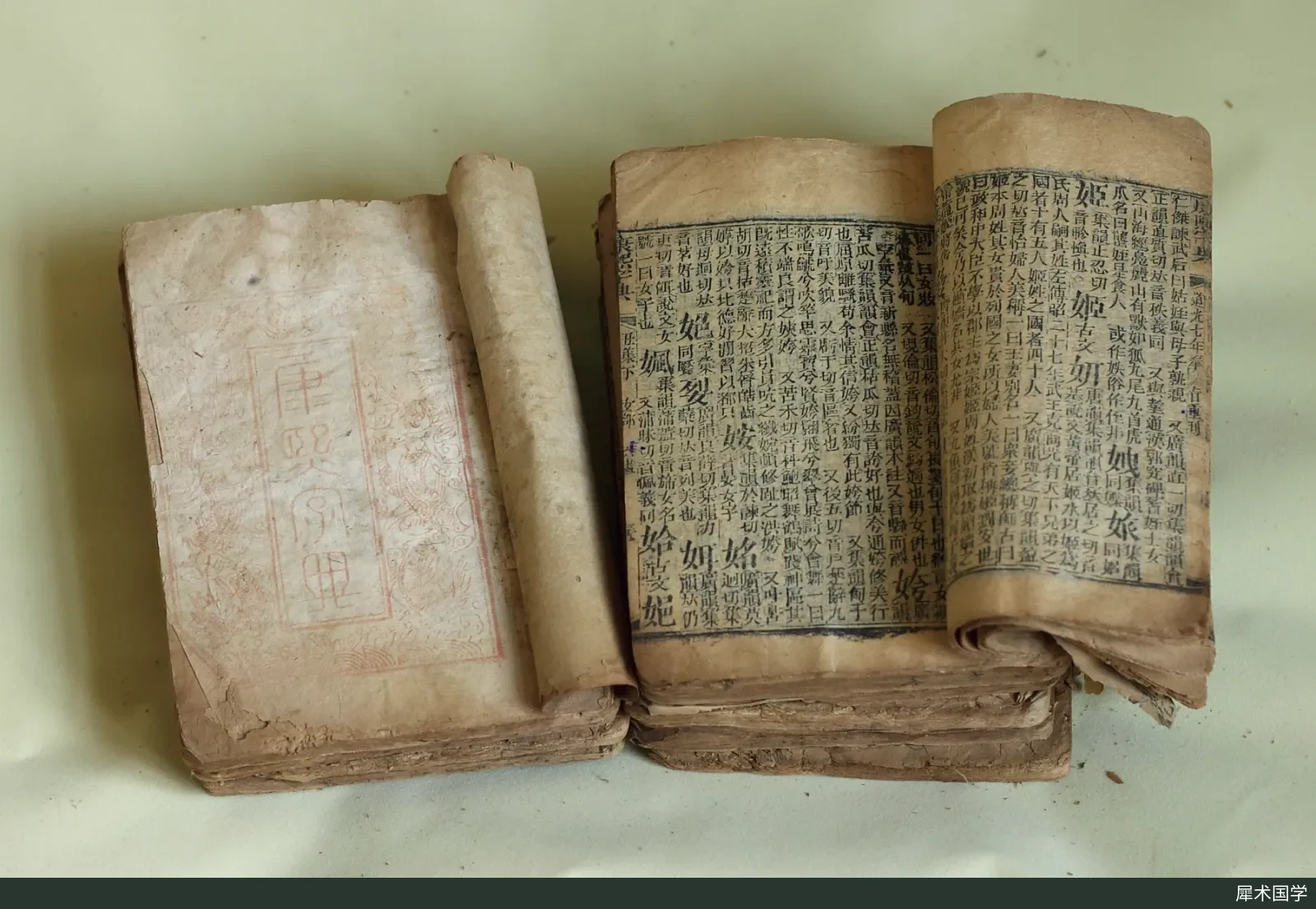
Kangxi Dictionary, Daoguang 7 (1827) reprint, physical photo; holding institution not stated. Photo: Doctoroftcm; source: Wikimedia Commons; license: CC BY-SA 4.0. OpenCC’s design documents say its “standard traditional” draws on historical usage such as the Kangxi Dictionary.

OpenCC (Open Chinese Convert) is an open-source Chinese conversion project maintained in the GitHub repository BYVoid/OpenCC. It converts among simplified and traditional Chinese and among Mainland, Taiwan, and Hong Kong character and word usage by means of dictionaries; it offers a C++ library, a command-line tool, and Python and Node.js bindings, under the Apache License 2.0. This article follows ver.1.4.2 (released 22 August 2026) and the repository documentation to explain configuration and calling methods, and what it can and cannot replace in classical-text work.
OpenCC conversion is dictionary-based, does not use large language models, can run offline, and always yields the same output for the same input. The conversion path is chosen by a JSON configuration file. Preset configs listed in the README include: s2t (simplified to OpenCC standard traditional) and its reverse t2s; s2tw and tw2s (Taiwan orthography); s2hk and hk2s (Hong Kong traditional); s2twp (simplified to Taiwan orthography with Taiwan common vocabulary) and tw2sp (Taiwan orthography to simplified with Mainland common vocabulary); and traditional-to-traditional t2tw, tw2t, t2hk, and hk2t. s2hkp and hk2sp are marked still under development; Japanese old/new forms (t2jp, jp2t) and small-seal (t2seal, s2seal, seal2t) configs are for exploratory research only; the project does not recommend them for production.
Before use, be clear what s2t produces. According to the repository’s OpenCC Design Principles (DESIGN_PRINCIPLES.md), the target of s2t—“OpenCC standard traditional”—is an internal intermediate layer that draws on historical usage such as the Kangxi Dictionary and tries to keep graphic distinctions among different senses; it is not equal to actual Taiwan, Hong Kong, or any regional orthography. Regional modes apply a regional glyph layer on top of this intermediate layer; modes with p add a regional common-vocabulary layer as well. So the same simplified passage may differ between s2t and s2tw on characters such as “喫/吃” and “纔/才.”
Install paths follow the README: on macOS, brew install opencc; on Windows, winget install opencc or download the official portable archive; Debian, Ubuntu, Fedora, and Arch Linux also package it; Python users run pip install opencc, Node.js users npm install opencc (global CLI: npm install -g opencc). For a one-off short conversion, use the online page given in the README: opencc.js.org.
On the command line, convert a text file from simplified to OpenCC standard traditional:
opencc -c s2t.json -i input.txt -o output.txt
In Python:
import opencc

converter = opencc.OpenCC("s2t.json")
print(converter.convert("汉字"))  # 漢字
The CLI bundled with Python and npm only does basic conversion; diagnostic modes --inspect (stage-by-stage results), --segmentation (segmentation only), and --ambiguities (flag one-to-many conversion sites) require the natively built C++ opencc command.
Version and license: as checked on 23 October 2026, the latest formal release was ver.1.4.2, dated 22 August 2026. The README states the project license is Apache License 2.0; among bundled third-party libraries, darts-clone and marisa-trie are BSD, tclap and rapidjson are MIT, and the optional segmentation plugin opencc-jieba depends on MIT-licensed cppjieba. For redistribution or embedding in commercial products, follow the license texts in the repository. The README’s privacy note says OpenCC is an offline text-conversion library and CLI and does not send information over the network unless the user explicitly asks.
Uses and value
In classical-text editing and Chinese-studies data work, OpenCC suits batch, reproducible glyph conversion: turning simplified punctuated editions or web material into traditional for reading against a base text; turning traditional electronic text into simplified for search and popular readers; or unifying traditional texts from mixed sources into one orthography. Results are dictionary-determined; if you record the version and config filename, others can reproduce the same output. Version 1.4.2 specifically patched classical-context problems. Per the release notes and merged pull request PR #1479 (author frankslin, merged 19 August 2026), characters such as “征,” “咸,” “斗,” “里,” “范,” “岳,” “冲,” “郁,” and “谷,” when no phrase hit, fell back to a single-character table ordered by modern usage and often chose wrongly for literary language and book titles; this update added sense-based phrases such as “咸淳,” “少长咸集,” “东斗星君,” and “岳武穆,” and kept “谷” for “谷神” (Laozi, “谷神不死”). Maintainers tested with titles from the Daizhi Ge classical corpus and fixed 46 of 47 reproducible misconversions.
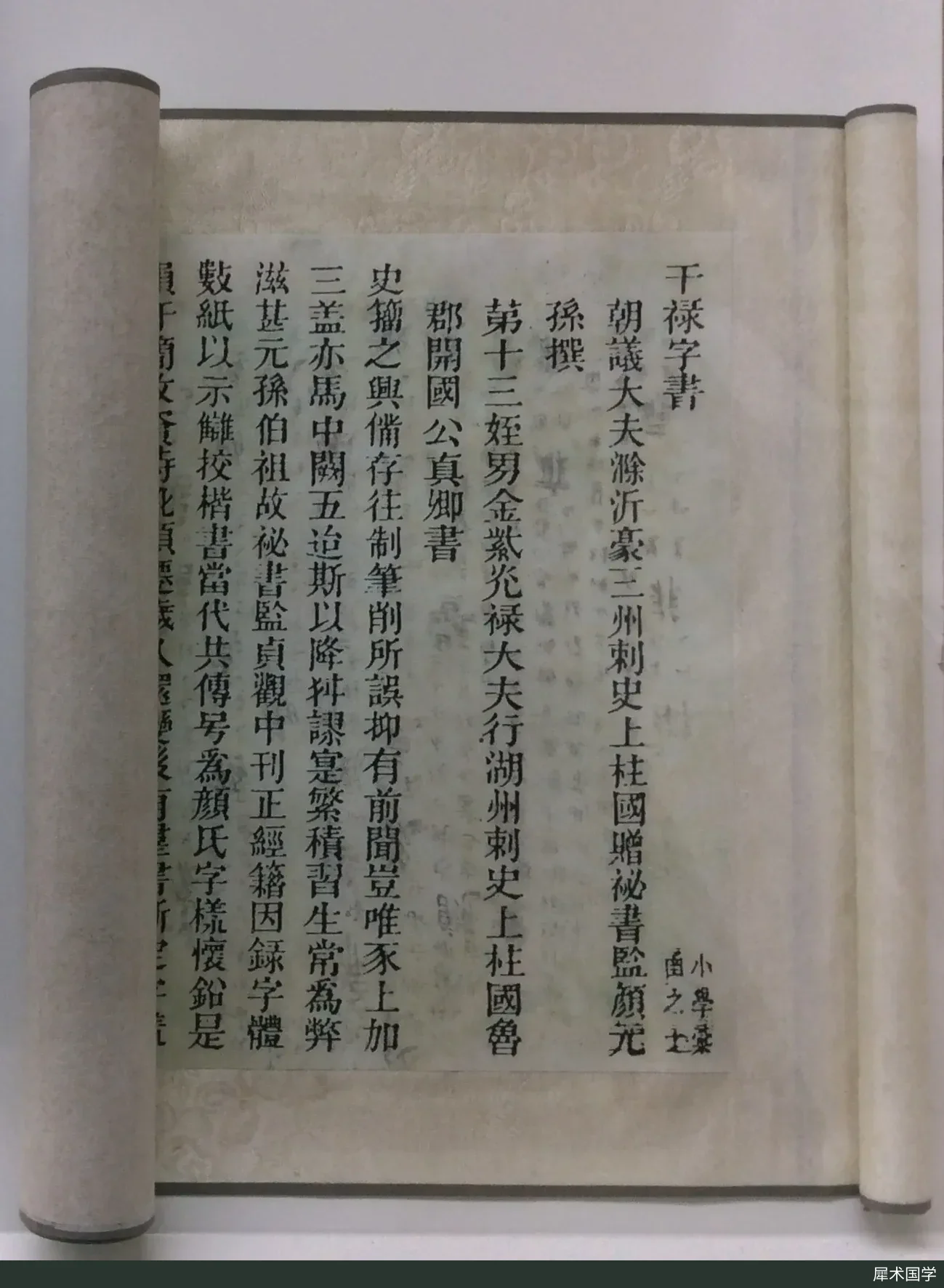
Ganlu zishu exhibit, Chinese Dictionary Museum (inside Huangcheng Xiangfu); transmission copy for the exhibit not stated; photographed 1 April 2014. Photo: Underbar dk; source: Wikimedia Commons; license: CC BY-SA 4.0.

Its limits likewise come from “conversion by dictionary.” First, one-simplified-to-many-traditional characters can only be chosen by phrase entries and default candidates; contexts missing from the dictionary will be wrong, and some contexts cannot even be separated by phrases: PR #1479’s notes say the Bencao gangmu needs “蟲部” and “穀部,” while radical names in the Shuowen jiezi and Kangxi Dictionary need “虫部” and “谷部”; no distinguishing phrase was found, so they were left out. Second, traditional-to-simplified merges glyphs and may lose information; the design document states conversion is not guaranteed reversible—t2s(s2t(x)) need not equal the original. In September 2026 a user reported that “夥” meaning “many” in “獲益甚夥” was converted by t2s to “伙” (issue #1489); such literary usages can only be fixed phrase by phrase. Third, to avoid over-conversion, when a character cannot be judged reliably (e.g. “沉/沈,” some “干/幹/乾”), OpenCC tends to keep the original, so the result may look “not fully converted.” Fourth, by the design document, OpenCC chooses characters only at the single-character and word-context level and does no deep semantic analysis; in this author’s view, loan characters, taboo avoidance, and base-text errors are therefore outside its scope, and s2t’s “standard traditional” is not the orthography of any classical base text.
So OpenCC output can only be a working draft, not a substitute for manual collation. A safer practice: leave the original untouched and convert only a copy; record the OpenCC version and config filename in the editing notes; use the native CLI’s --ambiguities to list one-to-many sites and --inspect to see which stage changed a character, then check each against base-text images. For fixed book and personal names, you can add an inline dictionary (type: "inline") at the front of the dictionary group in the config, but the README notes that output still passes later conversion steps and is not locked as final. Web-text handling is another use: when publishing for Taiwan readers, s2twp adjusts both glyphs and common words (e.g. “鼠标” → “滑鼠”), while s2hk only adjusts Hong Kong glyphs; regional word replacement changes wording and should not be used when quoting classical scripture or classical original text.
References
-
BYVoid/OpenCC: Open Chinese Convert README, GitHub main branch, consulted 2026-10-23. https://github.com/BYVoid/OpenCC
-
BYVoid/OpenCC: OpenCC Design Principles (DESIGN_PRINCIPLES.md), GitHub main branch, consulted 2026-10-23. https://github.com/BYVoid/OpenCC/blob/master/DESIGN_PRINCIPLES.md
-
BYVoid/OpenCC: ver.1.4.2 release notes, 2026-08-22. https://github.com/BYVoid/OpenCC/releases
-
frankslin: Add classical-context phrases to STPhrases for one-to-many s2t characters, BYVoid/OpenCC PR #1479, merged 2026-08-19. https://github.com/BYVoid/OpenCC/pull/1479
-
lihanglibrary: Wrong conversion of “夥” meaning “many” in traditional-to-simplified (e.g. “获益甚夥”), BYVoid/OpenCC issue #1489, 2026-09-08. https://github.com/BYVoid/OpenCC/issues/1489
-
Xishu Chinese Classics · When minds meet, craft appears in words
-
Information compiled and published by the Scholay academic one-stop platform; report infringement for takedown.
-
Also published on Enter Scholar, a scholars’ community for the intelligent age