What MARKUS can and cannot do as a markup platform for classical Chinese texts
Project overview
MARKUS (Chinese Text Markup & Analysis Toolkit) is a platform for reading and marking classical Chinese texts. It is suited to turning clues such as people and places into material that can be checked again. This account checks the functions against the project website and the developers’ published description. It does not come from an upload, a markup session, or an export tried here.
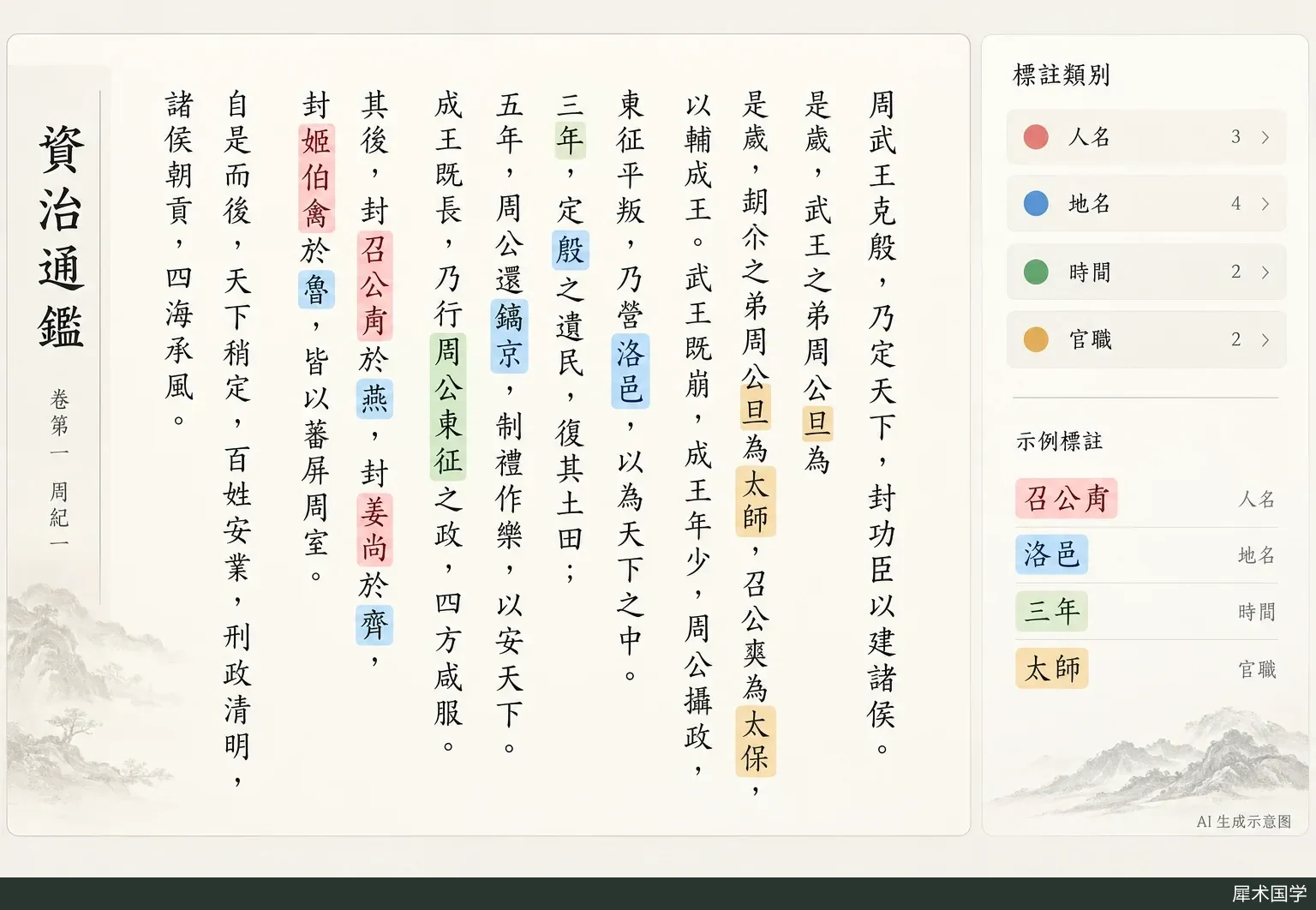
The automatic markup listed on the site covers Chinese personal names, place names, time, official titles, and Buddhist terms. The site also supports manual and batch markup, custom tags, and markup by a keyword list, keywords in context (KWIC), or a regular expression. Automatic results have to be read against the original text. A tag is not the same thing as a completed historical verification.
The site publicly lists case entries including A Map of Chinese Fiction, Joint Activities of the Ten Friends of the Northern Outskirts, and research on the recorders of Zhuzi yulei (Classified Conversations of Master Zhu). The Zhuzi yulei case is described as using personal names, place names, and official titles as clues. These are public examples of use. They do not mean this site has reproduced the results.
Practical value
When reading Zhuzi yulei, notebooks, or local texts, the places where people and locations appear can be left in the text and then read again in context, item by item. That helps build an index of names, gather material on one theme, and prepare candidate data for relationships among people or for geographic distribution. Counts and co-occurrence do not themselves prove intellectual influence or actual contact.
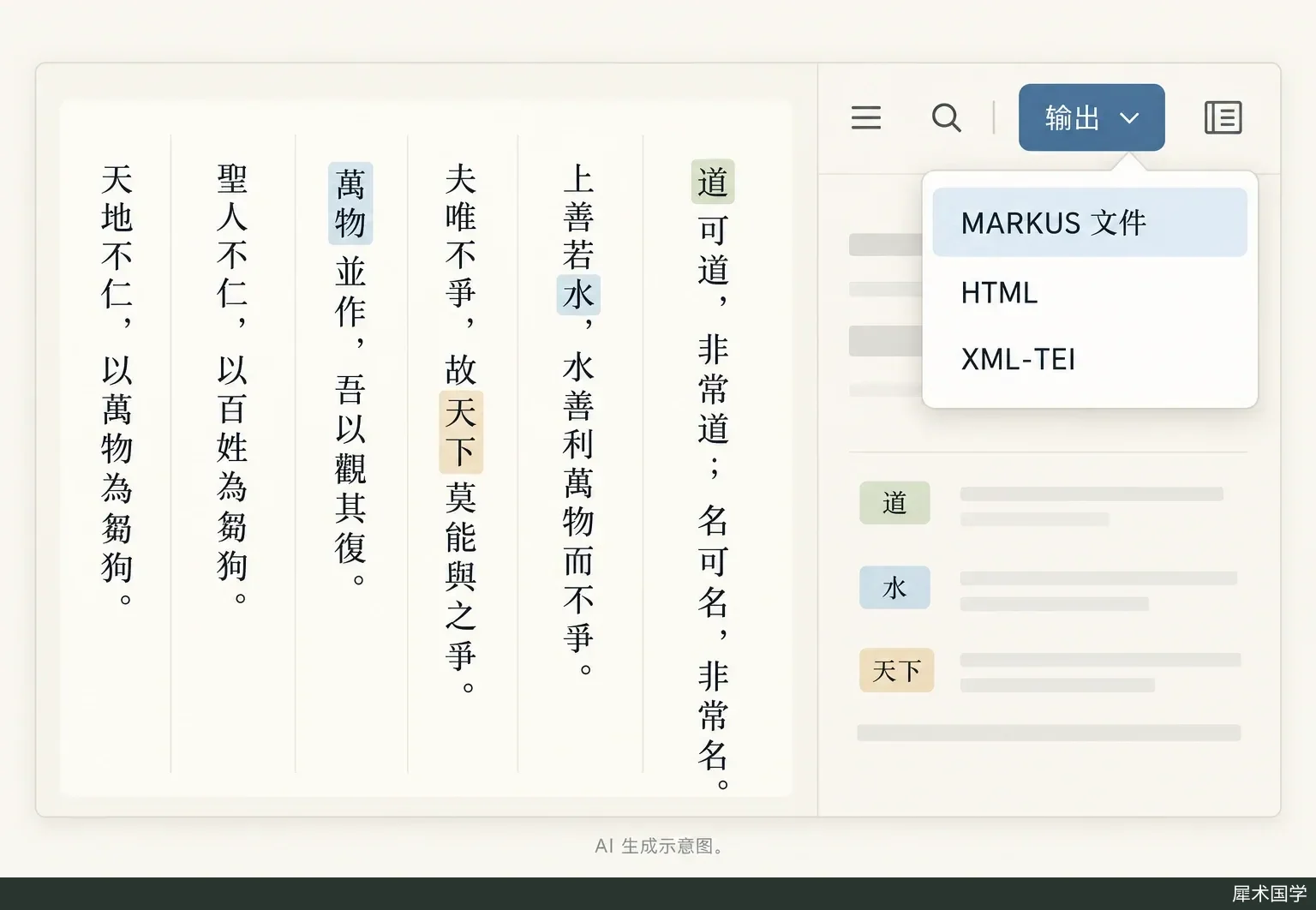
The developers’ description distinguishes two kinds of export. Marked text can be saved as a MARKUS file and exported as HTML or XML-TEI. Tags and related data can be used later in a table. An early project paper lists CSV, HTML tables, and Excel. Those are formats named in the literature. The options on the current screen, and whether a file can be exported and imported again, have not been tried here. Before use, confirm compatibility on a small sample and keep a backup of the original text.
MARKUS does not replace collation by hand. The same name for different people, different names for the same person, changes in place names, abbreviated official titles, and differences in sentence breaks can all affect recognition. Omissions, errors, and typing mistakes in the base text do not disappear because a tag has been added. While organizing the text, it is worth recording the book title, juan, the edition used, and the page, keeping the original transcription, checking tags and the database objects they point to by hand, and only then using the exported data. The license of the project code, the terms for the classical base text, and the terms for an external database are different layers. Being able to open the tool does not mean the text being processed may be republished freely.
References
- Xisi Guoxue.
- Compiled and published by Scholay. For a takedown request, send feedback.
- Also published at Enter Scholar.