Platforms and entry order for open courses on the Laozi
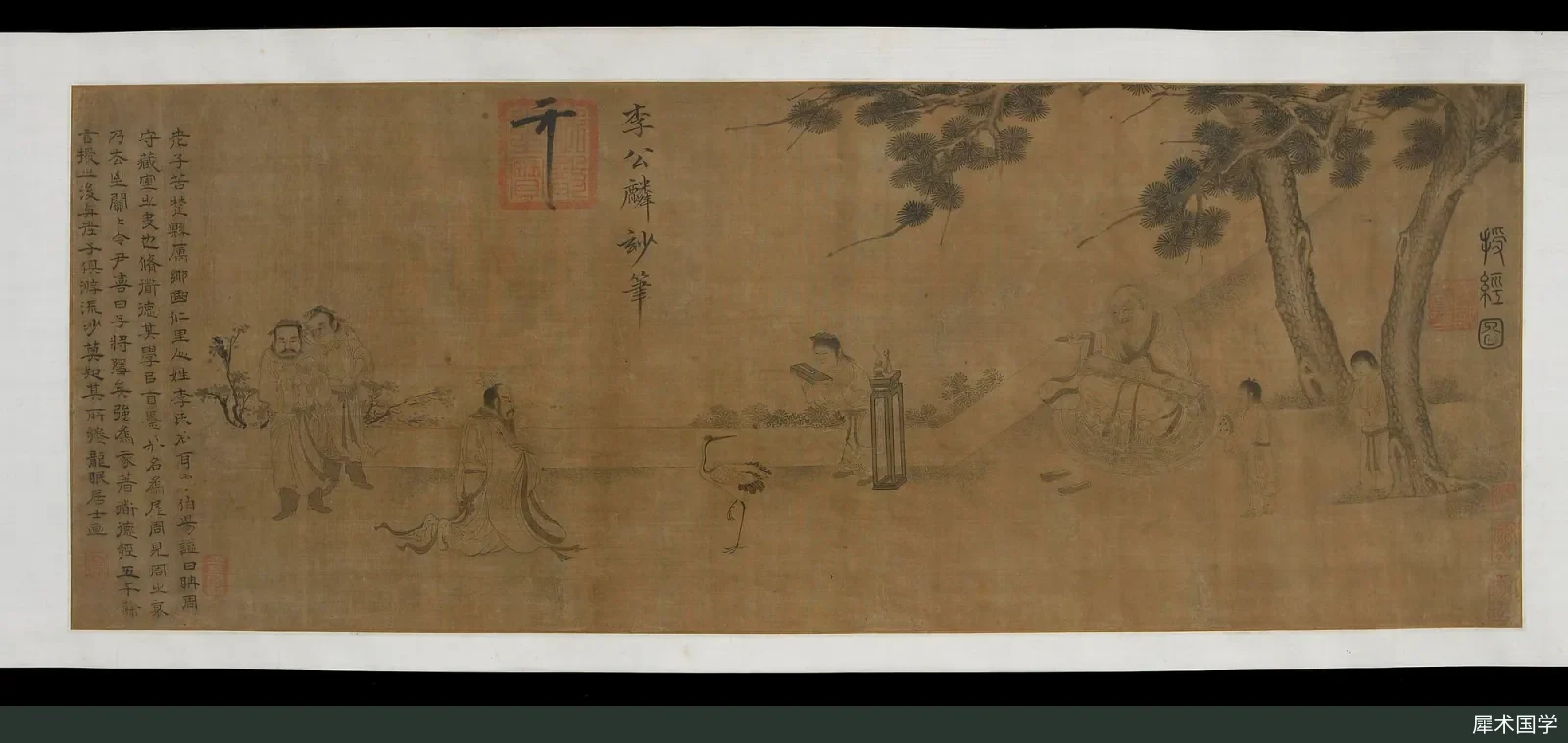
Laozi shoujing tu, attributed to Northern Song Li Gonglin, Freer Gallery of Art, Smithsonian National Museum of Asian Art, accession F1913.61. Image source: Smithsonian open images (via Openverse search); license CC0 1.0.
This article checked one by one eight publicly accessible university courses related to the Laozi (Daodejing) and one National Library lecture, covering China University MOOC, XuetangX, Coursera, edX, and NTU OpenCourseWare. It lists offering institution, instructor, language, fees, and October 2026 status; items without official information are marked “to be verified.” The close gives an entry order by learning aim and companion base texts.
Four dedicated courses on Chinese MOOC platforms
The following was checked on 22 October 2026 against course pages and the National Higher Education Smart Education Platform (below, “Smart Education Platform”). Terms roll forward; check the course page again before enrolling. China University MOOC course pages state that certified certificates require real-name verification and paid application; whether each course allows free auditing is not stated one by one on the pages and is recorded below as “to be verified.”
1. Daodejing|Xiamen University
- Instructor: Xie Qingguo (so credited on both China University MOOC’s “March is for Reading” topic page and the Smart Education Platform)
- Platform and language: China University MOOC, Chinese
- Fees: certificate by paid application; free auditing to be verified
- Status: Smart Education Platform shows Spring 2026 as 2 March–25 July, 21 weeks; later terms to be verified
- Content: 12 thematic lectures. Lecture 1 discusses title history, formation and versions, chapter order, and authorship—suited to clarifying “which text to read” first; later lectures turn to extensions in life, ethics, and social governance.
- Course bibliography: Xie Qingguo, Daode zhenjing jingyi (Religious Culture Press, November 2015); Zhan Shichuang, ed., Daodejing tongjie (Religious Culture Press, 2017); Chen Guying, Laozi jinzhu jinyi (Commercial Press, 2010); Huang Youjing, Laozi chuanzhen (Straits Literature and Art Press, 1998).
2. Wisdom Insights of the Daodejing|Ocean University of China
- Instructor: Ding Yuzhu (associate professor, College of Literature and Journalism, per XuetangX faculty note)
- Platform and language: China University MOOC, XuetangX (self-paced), Zhihuishu; Chinese
- Fees: XuetangX self-paced mode free to learn, certified certificate separately paid; China University MOOC certificate by paid application
- Status: XuetangX self-paced “open year-round”; Smart Education Platform shows Zhihuishu term 21 July 2026–20 January 2027, status “in session” (page updated 16 October 2026)
- Content: chapter-by-chapter through the received eighty-one chapters, summarized as “101 wisdom insights,” stressing self-cultivation and governance applications. The course page states it was recognized in 2017 as a National Boutique Online Open Course.
- Reading note: the course explains the Daodejing through Yijing principles and discusses the meaning of “fengshui.” That is the instructor’s interpretive path, not content of the Laozi classic itself or of Wang Bi, Heshang Gong, and other commentaries; keep them separate while listening.
- Course bibliography: Daodejing jiangyi (Zhonghua Book Company collectible edition), Zhonghua Book Company, April 2013.
3. Guided Reading of the Daodejing|Guangxi University
- Instructor: Zheng Zhaohui; course team also includes Meng Shaorong, Yuan Jingwen, Zhang Rui, Huang Huang, Xie Qunyang, Zhang Yiran, Huang Chuangde (per Smart Education Platform)
- Platform and language: China University MOOC, also a Xueyin Online version; Chinese
- Fees: to be verified
- Status: Smart Education Platform’s most recent Xueyin Online round was 24 September–10 December 2023, ended; China University MOOC current term to be verified
- Content: drawing on bamboo-and-silk Laozi research, reads the received eighty-one chapters chapter by chapter and phrase by phrase, and discriminates among readings; the overview section treats textual history, versions, and authorship. Overview and textual reading are required; cultural influence, Three Teachings debates, and visits to Three Teachings sites are optional.
- Assessment: unit-quiz average counts as 40 points, final online exam as 60.
- Course bibliography: Sun Yikai, Laozi zhuyi san zhong; Lou Yulie, Laozi Daodejing zhu jiaoshi; Chen Guying, Laozi zhuyi ji pingjie; Liu Xiaogan, Laozi gujin; Zhan Jianfeng, Laozi qi ren qi shu ji qi daolun (course page gives no publication details).
4. The Daodejing and Management Wisdom|Huaqiao University
- Instructor: aggregator Class Central labels Zhang Xiangqian; Chinese name to be verified
- Platform and language: XuetangX; Chinese
- Fees and status: found only on Class Central; official XuetangX course page to be verified; aggregator says free to social learners since 2020—likewise to be verified
- Content: serial lecture by chapter and phrase of the Daodejing, landing on management applications.
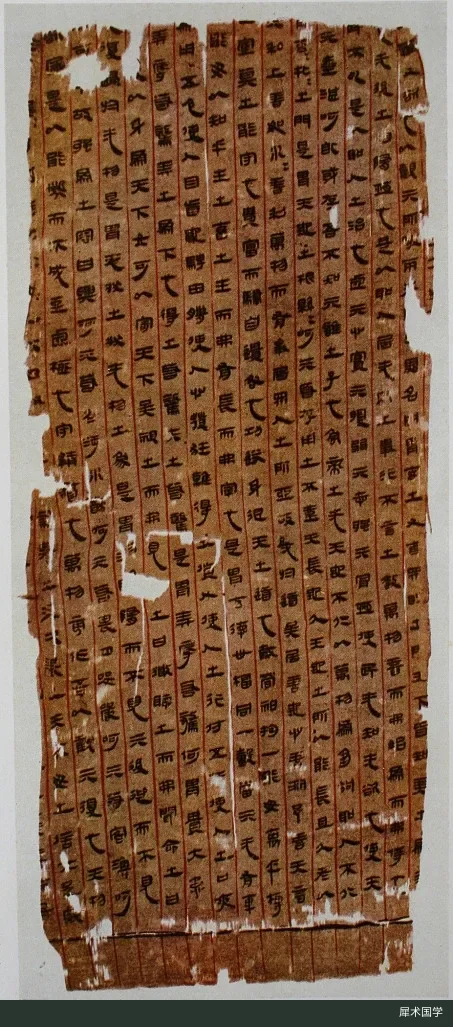
Detail of Western Han silk manuscript Laozi text B, from Mawangdui Tomb 3, Changsha, Hunan, held by the Hunan Museum. Plate originally published in Mawangdui Hanmu boshu (1) (Cultural Relics Press, March 1980). Image source: Wikimedia Commons, public domain. The silk manuscript places the De classic before the Dao classic, reversing the Wang Bi received order.
International platforms and open courseware
Most courses in this group place Laozi in the overall Daoist or pre-Qin masters frame rather than chapter-by-chapter close reading.
5. Savoring the Wisdom of Daoism|Xi’an Jiaotong University
- Instructor: Han Pengjie
- Platform and language: Coursera; taught in simplified Chinese
- Fees: Coursera page states a certificate requires purchasing a certificate plan; some users may try free first; whether free full audit is offered to be verified
- Status: self-paced; course page still reachable in October 2026
- Content: six modules. The first two treat Daoist origins and the aims of “clarity, emptiness, lowliness, and weakness”; modules 3 and 4 treat Laozi—“Laozi the person and the book” videos total 46 minutes, “Laozi’s Way” videos 78 minutes, themes “highest good is like water” and “reversal is the movement of the Way”; the last two modules treat Zhuangzi. The course page marks difficulty Advanced; the content is introductory in practice.
6. The Path to Happiness: What Chinese Philosophy Teaches Us about the Good Life|Harvard University
- Instructor: Michael Puett (Walter C. Klein Professor of Chinese History and Anthropology, Harvard)
- Platform and language: edX (HarvardX); English, classics in English translation
- Fees: free audit (Audit for Free); verified certificate USD 149
- Status: self-paced, available anytime; Harvard Professional & Lifelong Learning page marks 13 weeks, 2–4 hours per week
- Content: Confucius, Mozi, Mencius, Laozi, Zhuangzi, Xunzi, Han Feizi; Laozi is only one part; the stress is bringing classical thought into contemporary life discussion.
7. New Horizons in Chinese Philosophy|Tsinghua University
- Instructor: Yuncheng Zhou (third-party course directories call him an associate professor in Tsinghua’s Department of Foreign Languages); Chinese name to be verified
- Platform and language: edX (TsinghuaX); English
- Fees and status: third-party directories say self-paced, free audit, paid certificate; on 22 October 2026 the edX course URL returned 404; whether enrollment is currently open to be verified
- Content: introduction to pre-Qin thought including Confucius, Mozi, Laozi, Zhuangzi, Mencius, Xunzi, Han Feizi.
8. Introduction to Classical Chinese Philosophy|National Taiwan University
- Instructor: Masayuki Sato (Institute of Philosophy)
- Platform and language: NTU OpenCourseWare; course blurb and unit titles in English
- Fees and status: open courseware, 14 lectures; videos and slides viewable or downloadable online
- Laozi-related: lecture 9, “The Crystallization of the Concept of the Way: The Book of Laozi,” with MP4 video (320.4 MB) and PPTX slides. The previous lecture treats Jixia scholars, the next the Zhuangzi, convenient for placing Laozi in the evolution of pre-Qin thought.
- Supplement: NTU’s Chinese department also has course code CHIN2123, “Laozi Jia Shang”; the course map shows semester 114-1 taught by Ding Liang, but no OpenCourseWare audio-video was found, so off-campus readers cannot follow along.
Supplementary lecture: Laozi’s “Dao” and “Road”—Laozi’s Cultural Image and Paths to Reading the Daodejing|National Library Open Course
- Instructor: Wang Deyan; affiliation to be verified
- Platform: National Library of China “National Library Open Course”; fees and whether registration is required to be verified
- Content: starts from the finds of the Mawangdui silk, Guodian Chu bamboo, and Peking University Han bamboo Laozi, discussing Laozi’s cultural image and paths to reading the Daodejing. This is a single lecture, not a systematic course.
Course advice and entry order
Choose first by aim:
- Want to read all eighty-one chapters through: choose Guangxi University’s Guided Reading of the Daodejing, which lectures chapter by chapter and phrase by phrase and also covers bamboo-and-silk research. If time is short, first watch Xiamen University Daodejing lecture 1 to clarify title, versions, and chapter-order questions.
- Want only a frame first: Coursera Savoring the Wisdom of Daoism modules 3–4, about two hours of video, or NTU Introduction to Classical Chinese Philosophy lecture 9—both can be finished in a weekend.
- Studying in English, or wanting to see how overseas classrooms treat Laozi: HarvardX’s Puett course can be audited free; the NTU course is also in English. In both, Laozi is only one part.
- Prefer self-cultivation and management applications: Ocean University of China and Huaqiao University. Their extensions are largely the instructors’ elaborations; listen against the classic and commentaries.
Entry in four steps:
- First fix a base text. For the received text use Wei Wang Bi’s commentary, Lou Yulie collated, Laozi Daodejing zhu jiaoshi (New Compilation of the Masters, Zhonghua Book Company, December 2008, 210 pp.); Lou takes the Zhejiang Book Company woodblock of Ming Huating Zhang Zhixiang as base. To compare excavated texts, pair Gao Ming’s Boshu Laozi jiaozhu (New Compilation of the Masters, first series, Zhonghua Book Company, May 1996, 478 pp.; a simplified horizontal edition also appeared in 2024), which follows the silk order with De before Dao and collates silk A, silk B, and Wang Bi in that sequence.
- Watch one survey course or single lecture to place Laozi in pre-Qin thought.
- Then follow one chapter-by-chapter course, reading the original and Wang Bi’s note yourself before each chapter.
- Keep notes in three layers: classic wording, historical commentary (e.g. Wang Bi), and the lecturer’s modern extension. Mark version differences as you go. For example, received chapter 1 has “the Way that can be spoken is not the constant Way”; silk A and B write “constant Way” as “enduring Way”; Zhang Dainian’s preface to Gao Ming’s book accordingly treats the silk as a pre–Emperor Wen of Han older text. On when the upper and lower parts of the Laozi were written, Zhang’s preface argues for early Warring States; the field has other views, and readers need not take any one as settled.
Before enrolling, confirm the current term and certificate fees on the course page; items this article marks “to be verified” follow what official pages later publish.
References
-
Xiamen University Daodejing course page, China University MOOC: https://www.icourse163.org/course/XMU-1002558001 (accessed 2026-10-22)
-
“March is for Reading” topic page, China University MOOC: https://www.icourse163.org/topics/Book20180302 (accessed 2026-10-22)
-
Xiamen University Daodejing, National Higher Education Smart Education Platform: https://higher.smartedu.cn/course/66d39e8d711dc30c348ee83a (page updated 2026-03-01)
-
Ocean University of China Wisdom Insights of the Daodejing course page, China University MOOC: https://www.icourse163.org/course/ouc-495005 (accessed 2026-10-22)
-
Ocean University of China Wisdom Insights of the Daodejing, XuetangX: https://v1-www.xuetangx.com/courses/course-v1:OUC+14001060+sp/about (accessed 2026-10-22)
-
Ocean University of China Wisdom Insights of the Daodejing (Zhihuishu), National Higher Education Smart Education Platform: https://higher.smartedu.cn/course/671acb4516d8a05eedca1fdd (page updated 2026-10-16)
-
Guangxi University Guided Reading of the Daodejing course page, China University MOOC: https://www.icourse163.org/learn/GXU-1205852802 (accessed 2026-10-22)
-
Guangxi University Guided Reading of the Daodejing (Xueyin Online), National Higher Education Smart Education Platform: https://higher.smartedu.cn/course/65135ea7374ed23bd756152d (page updated 2026-10-06)
-
Huaqiao University The Daodejing and Management Wisdom, Class Central (third-party aggregator): https://www.classcentral.com/course/xuetangx-371960 (accessed 2026-10-22)
-
Xi’an Jiaotong University Savoring the Wisdom of Daoism, Coursera: https://www.coursera.org/learn/daojiao (accessed 2026-10-22)
-
The Path to Happiness: What Chinese Philosophy Teaches Us about the Good Life, Harvard Professional & Lifelong Learning: https://pll.harvard.edu/course/path-happiness-what-chinese-philosophy-teaches-us-about-good-life (accessed 2026-10-22)
-
New Horizons in Chinese Philosophy (edX), MOOC List (third-party directory): https://www.mooc-list.com/course/new-horizons-chinese-philosophy-edx (accessed 2026-10-22)
-
Introduction to Classical Chinese Philosophy, lecture 9, NTU OpenCourseWare: https://ocw.aca.ntu.edu.tw/ntu-ocw/index.php/ocw/cou/100S109/9 (accessed 2026-10-22)
-
Laozi Jia Shang (CHIN2123), NTU course map: http://coursemap.aca.ntu.edu.tw/course_map_all/course.php?code=101+331A1 (accessed 2026-10-22)
-
Wang Deyan, Laozi’s “Dao” and “Road”, National Library Open Course: http://open.nlc.cn/onlineedu/course/detail/show/course.htm?courseid=4333 (accessed 2026-10-22)
-
[Wei] Wang Bi, commentary; Lou Yulie, collated: Laozi Daodejing zhu jiaoshi, New Compilation of the Masters, Beijing: Zhonghua Book Company, December 2008, 210 pp. Bibliography per Niigata University Library catalog: https://opac.lib.niigata-u.ac.jp/en/recordID/catalog.bib/ba89749388; base-text note per University of International Business and Economics Library abstract: https://opac.uibe.edu.cn/opac/book/e626c3345cf0c50bb0653e382f171dfd
-
Gao Ming: Boshu Laozi jiaozhu, New Compilation of the Masters, first series, Beijing: Zhonghua Book Company, May 1996, 478 pp. Bibliography per Niigata University Library catalog: http://opac.lib.niigata-u.ac.jp/en/recordID/catalog.bib/BN15211708; simplified horizontal edition on Zhonghua Book Company book page: http://www.zhbc.com.cn/zhsj/fg/book/bookinfo.html?bookid=297ec13d91e41bd601921cc0b3d202ef
-
Zhang Dainian: preface to Boshu Laozi jiaozhu, transcribed from Dushu Net book blurb: https://www.dushu.com/book/10582060/ (accessed 2026-10-22)
-
Xishu Chinese Classics · When minds meet, craft appears in words
-
Information compiled and published by the Scholay academic one-stop platform; report infringement for takedown.
-
Also published on Enter Scholar, a scholars’ community for the intelligent age