The Han-slip Yili from Wuwei was excavated in 1959 from a Han tomb at Mozuizi in Wuwei, Gansu, and is now in the Gansu Provincial Museum. The manuscripts are in three copies, jia, yi, and bing. They keep chapters of the ritual classic and also traces of how the slips were bound and written. To discuss their value as witnesses, the titles, the order, and the words of the classic and the commentary have to be compared separately. The three copies from one tomb are not one complete received Yili.
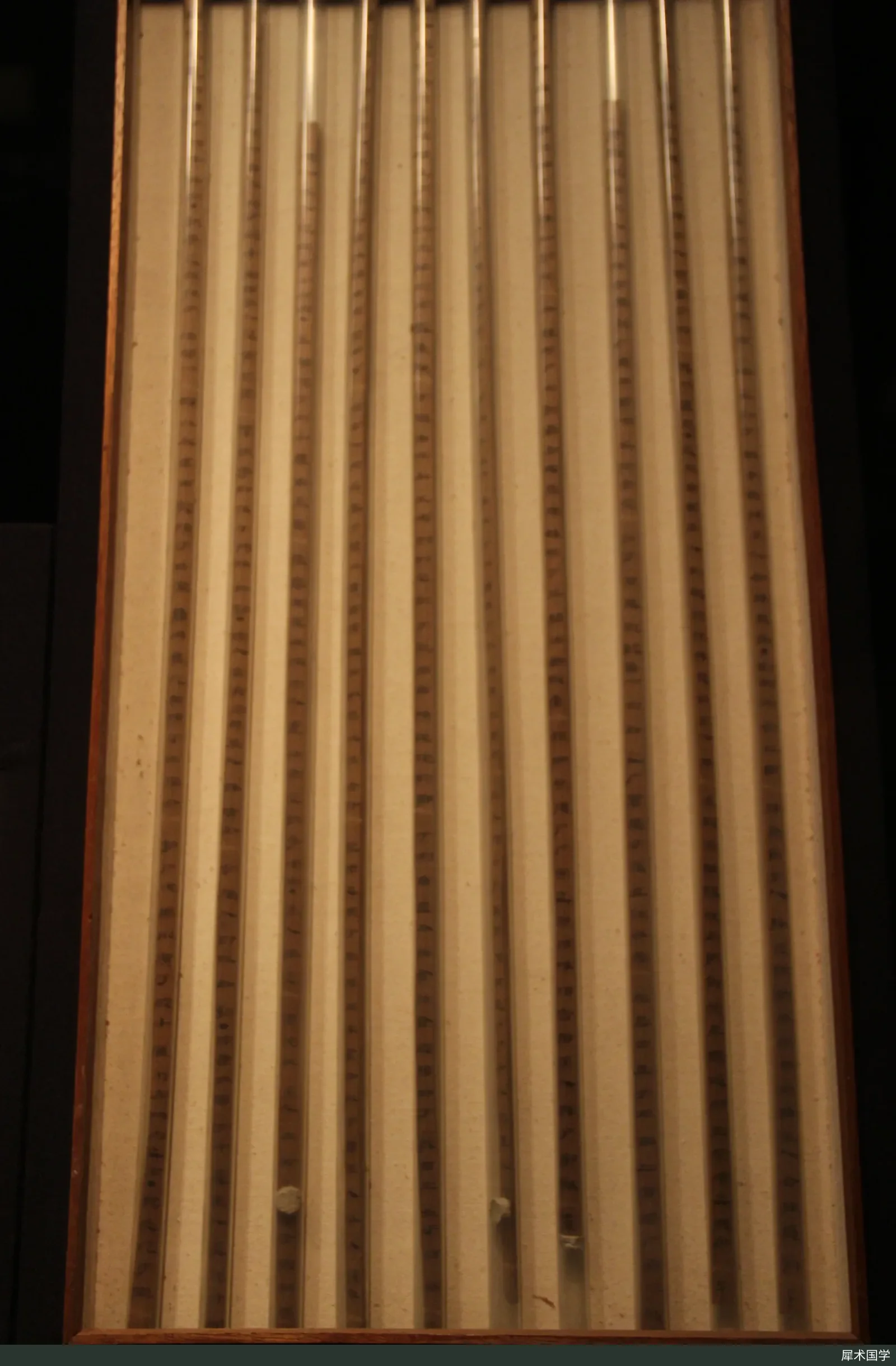
Excavation and arrangement
In an interview with China News Service, Tian He said the slips came from Han tomb 6 at Mozuizi. The editors divided them into three copies by material, form, and handwriting. The jia and yi copies are wooden slips. The bing copy is bamboo. The interview gives a total of 469 slips: 398 in jia, 37 in yi, and 34 in bing. That count is the one given in the interview. How the excavation report counts the slips, and the original pages, are still to be checked.
The basic edition is Wuwei Han slips, compiled by the Gansu Provincial Museum and the Institute of Archaeology of the Chinese Academy of Sciences (Wenwu Press, 1964). The original pages were not obtained in this round. Page citations are still to be checked. It cannot be claimed that every slip was checked. The date of the tomb, the date the manuscript was copied, and the date the chapters of the ritual classic were formed also have to be handled separately.
Which chapters the three copies keep, and the range of collation
The Tian He interview lists seven chapters in the jia copy: Shi xiangjian zhi li, third; Fu zhuan, eighth; Te sheng, tenth; Shao lao, eleventh; You si, twelfth; Yan li, thirteenth; and Tai she, fourteenth. The yi copy keeps Fu zhuan. The bing copy keeps Sang fu. “Seven chapters plus one plus one” is a count of what the three manuscripts preserve. It is not nine non-overlapping chapters of the ritual classic. The titles on the slips, the order that actually survives, and how that corresponds to the received text still have to be checked against the excavation report.
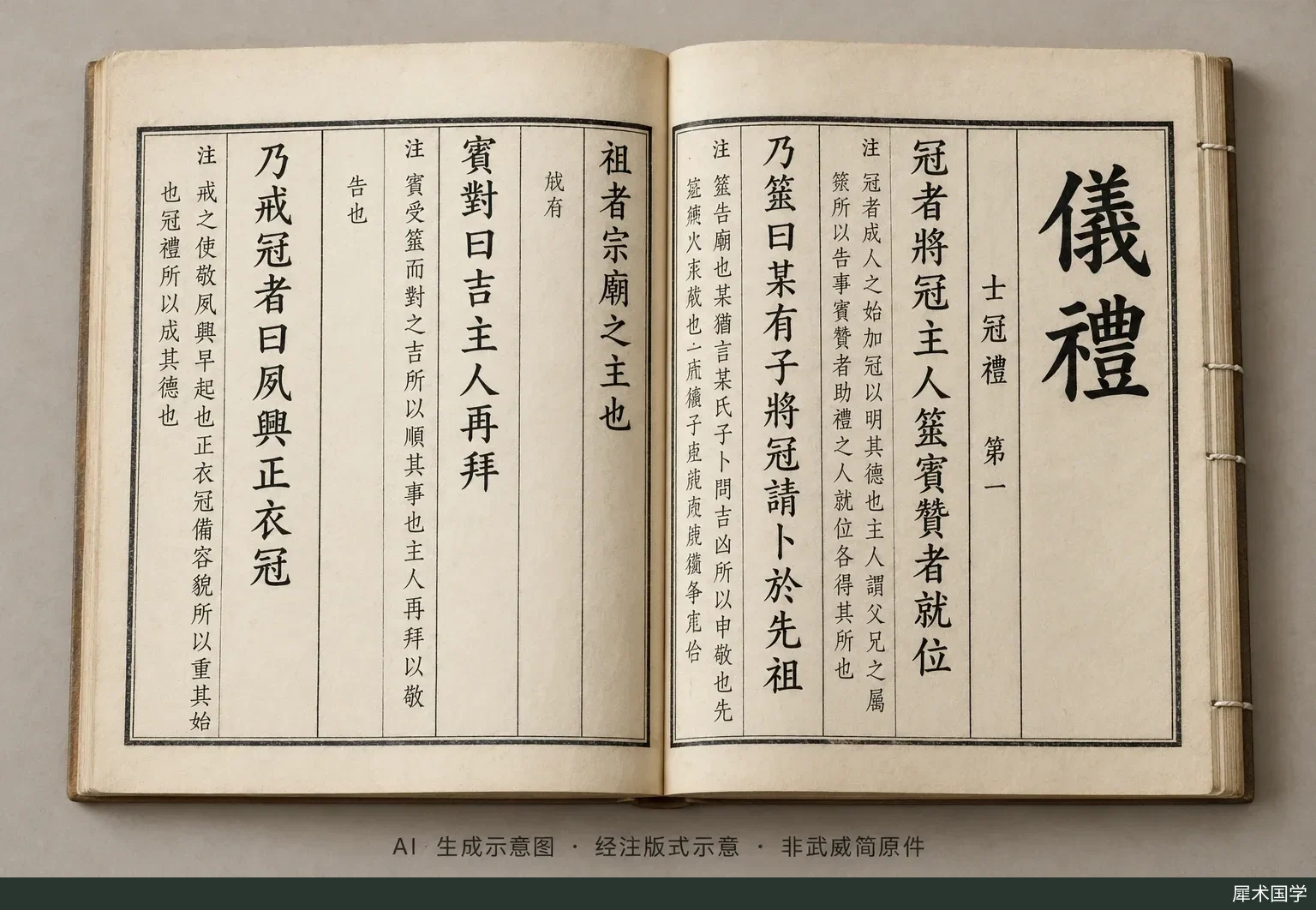
Textual variants are still to be checked. A character-by-character comparison has to list the slip number, the editor’s reading, and the edition, juan, and page of the received text used, and it has to separate the classic, Zheng Xuan’s commentary, and Jia Gongyan’s subcommentary. The original pages of a collation were not obtained in this round. Particular variants are not listed. The difference in wording between the slip title Tai she and the received title Dashe yi is not read here as a difference in the ritual itself.
What the transmission can show, and where it stops
As a method of studying texts, titles, order, and wording are evidence about the text. Material, binding cords, and handwriting are evidence about the book as an object. The two kinds of evidence can together help study how a classic was copied, bound, and used. They cannot, from the fact of one tomb alone, decide that the three copies were taken from one exemplar, or that the tomb occupant belonged to one scholarly lineage. The relation to the new-text and old-text traditions, and to Qing-family ritual learning, and the arguments and disagreements in reliable studies, are still to be checked. This article does not assign the copies to a lineage.
References
- Tian He, interviewed in China News Service’s “East-West Questions,” “The first slips under heaven,” and how they became a bridge, reprinted on the Silk Road (Dunhuang) International Cultural Expo site, the page dated 24 July 2023. The full text was read, for a first account of the excavation, the materials, and which chapters survive. That date is the reprint page. The date the interview was first published is still to be checked.
- Status of the excavation report: Wuwei Han slips, compiled by the Gansu Provincial Museum and the Institute of Archaeology, Wenwu Press, 1964, is the basic work named for the task. The original pages were not obtained in this round, so it is not listed as a work checked directly. Particular pages and textual variants are still to be checked.
- Xisi Guoxue.
- Compiled and published by Scholay. For a takedown request, send feedback.
- Also published at Enter Scholar.