Project overview
This note gathers three university courses on the Shijing (Classic of Poetry) that can be taken by registering on a public platform, for a reader who wants to read the poems in a systematic way. The main recommendation is the introduction taught by Wang Chenglüe of Shandong University on Chinese University MOOC. It also includes the introduction taught by Yi Weihua of Hebei Normal University, as a way in, and the Shijing part of Xi’an Jiaotong University’s “Reading the Classics,” as a supplement for the Airs of the States. The institution, the lecturer, the platform, the fee, the language, and whether each course can be studied now are taken from the course pages, the national smart higher-education platform, and the universities’ own sites, as read on 24 October 2026. An item a page does not state is marked “not yet checked.” Enrollment status changes with the term. Check the course page before signing up.
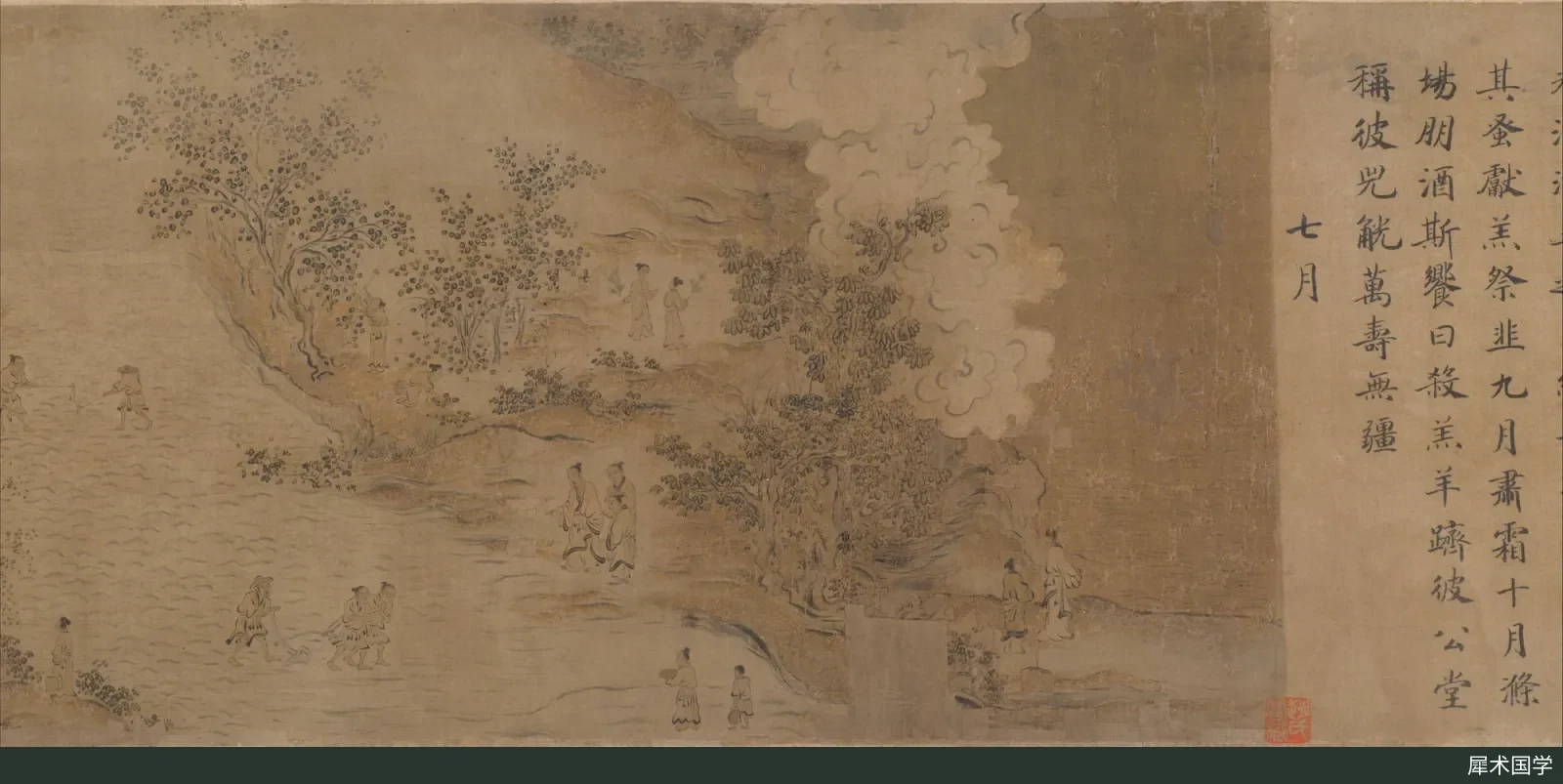
A section of Illustrations to the Odes of Bin from the Shijing, painted by Ma Hezhi and assistants in the Southern Song, with calligraphy attributed to Emperor Gaozong, mid-12th century, ink and color on silk. The Metropolitan Museum of Art, accession 1973.121.3. Source: Wikimedia Commons (the museum’s open-access file). License: CC0 1.0.
| Course | Institution | Lecturer | Platform | Fee | Language | Can it be studied now? |
|---|---|---|---|---|---|---|
| Introduction to the Shijing | Shandong University | Wang Chenglüe | Chinese University MOOC (iCourse) | The course page gives no price; not yet checked. A verified certificate is paid. | Chinese. The course page and syllabus use traditional characters. The language of instruction is not listed separately; not yet checked. | The smart-education platform shows this session, 15 September 2026 to 5 January 2027, as in progress. |
| Introduction to the Shijing | Hebei Normal University | Yi Weihua | Chinese University MOOC; Zhihuishu | The course page gives no price; not yet checked. A verified certificate is paid. | Chinese. The language of instruction is not listed separately; not yet checked. | Zhihuishu shows “2027 spring–summer, enrolling.” The entry is a school course-selection application. The current status on Chinese University MOOC is not yet checked. |
| Reading the Classics: selections from the Shijing, the Laozi, and the Zhuangzi | Xi’an Jiaotong University | Han Pengjie and Liu Yanyan (from the academic-affairs course note; the signature on the MOOC page is not yet checked) | Chinese University MOOC | The course page gives no price; not yet checked. | Chinese. The language of instruction is not listed separately; not yet checked. | The status of the current session is not yet checked. |
Shandong University’s introduction to the Shijing
This course is one of the Nishan Academy series of MOOCs on the classical canon at Shandong University, and it is the main way in for this note. The course page says it does not follow the original order of Airs, Odes, and Hymns. It sorts by theme. The first chapter covers how the Shijing was formed, its basic character, its classification, its regions and periods, and how to read it. Later chapters take, in order, poems of farming, war, corvée labor, marriage and courtship, feasting, praise and blessing, and satire and admonition. The last chapter reads selected poems of mourning, of stating one’s feelings, of longing to return, and of seeing someone off. The poems discussed also include works from the Odes and Hymns, such as “Chen Gong” in the Hymns of Zhou, “Zheng Yue” in the Minor Odes, and “King Wen” in the Major Odes. The course page gives about 10–15 minutes a lesson and about 1.5–2.5 hours a week. The chapters on marriage and courtship and on praise take about three hours. The preparation asked for is the ability to read traditional characters, and a working knowledge of the study of characters, of historical phonology, and of exegesis. The books listed are Gao Heng, Shijing jinzhu (Shanghai Guji, 2009); Cheng Junying and Jiang Jianyuan, Shijing zhuxi (Zhonghua, 1991); Li Shan, Shijing de wenhua jingshen (Anhui Education, 2016); and Nie Shiqiao, Shijing xinzhu (Qilu, 2001). The course introduction’s summary of the upper and lower dates of the Shijing period, and of how far the texts can be trusted, is the course’s own view. When it is repeated, the source should be named.
Hebei Normal University’s introduction to the Shijing
The course page presents this as a general-education course for undergraduates and junior-college students. It chooses relatively representative poems and reads them closely by topic, such as love, marriage, travel and service, and farming, together with the historical setting, and from there it talks about the broader development of ancient literature and of classical studies. The lecturer, Yi Weihua, is vice-dean of the School of Literature at Hebei Normal University and a council member of the China Shijing Society. His research is literature of the pre-Qin and Han periods. The MOOC is a Hebei provincial quality online open course, according to a teacher profile from the Literature Department of Huihua College at Hebei Normal University. The same course is marked on Zhihuishu as 2 credits, 28 class hours, and 2 in-person sessions. The entry is “school course-selection application.” Whether an individual learner can enroll alone is not yet checked.
The Shijing part of Xi’an Jiaotong University’s “Reading the Classics”
This course combines the Shijing, the Laozi, and the Zhuangzi. The Shijing part selects representative pieces from the fifteen Airs of the States only. While introducing local custom and historical setting, it reads them from the angles of classical studies, neo-Confucian learning, and literature. The course page lists Yu Guanying, Shijing xuan; Gao Heng, Shijing jinzhu; Wang Li, Shijing yundu; Zhao Peilin, Xing de yuanqi; and Ye Shuxian, Shijing de wenhua chanshi. The academic-affairs introduction at Xi’an Jiaotong University separately names Cheng Junying, Shijing (Shanghai Guji, 2010), as the textbook. This note uses the course only as a supplement when reading the Airs. The Laozi and Zhuangzi parts are outside it.
Practical value
The three courses emphasize different things, and they can be used in order of difficulty. Hebei Normal University starts from topics such as love, marriage, travel and service, and farming, and works mainly by close reading. It suits a reader meeting the Shijing for the first time who wants an overall picture. Shandong University regroups poems from the Airs, Odes, and Hymns by theme. It covers the most ground, and it asks for traditional characters and for some knowledge of characters, phonology, and exegesis. It suits a main line of systematic study. The Shijing part of the Xi’an Jiaotong course stays with the fifteen Airs and also keeps the readings of classical studies, neo-Confucian learning, and literature, so it can be set beside another way of teaching when those poems are being read. This order is a suggestion this site makes from the course pages. It is not an arrangement by the courses. A reader who already has some classical Chinese can start directly with Shandong University.
Reading the lectures against the commentaries
A lecture is the lecturer’s reading. It is not the same thing as the text itself or as the commentaries of later ages. While listening, the original can be checked against the reference books. Gao Heng’s Shijing jinzhu is listed by both Shandong University and Xi’an Jiaotong University. Shandong University also lists Cheng Junying and Jiang Jianyuan, Shijing zhuxi. For the point of many poems, the Mao preface, Zhu Xi’s Shi jizhuan, and modern commentaries do not agree. A claim heard in class can be taken back to those commentaries. Where they differ, the several accounts can stand together. There is no need to keep only one.
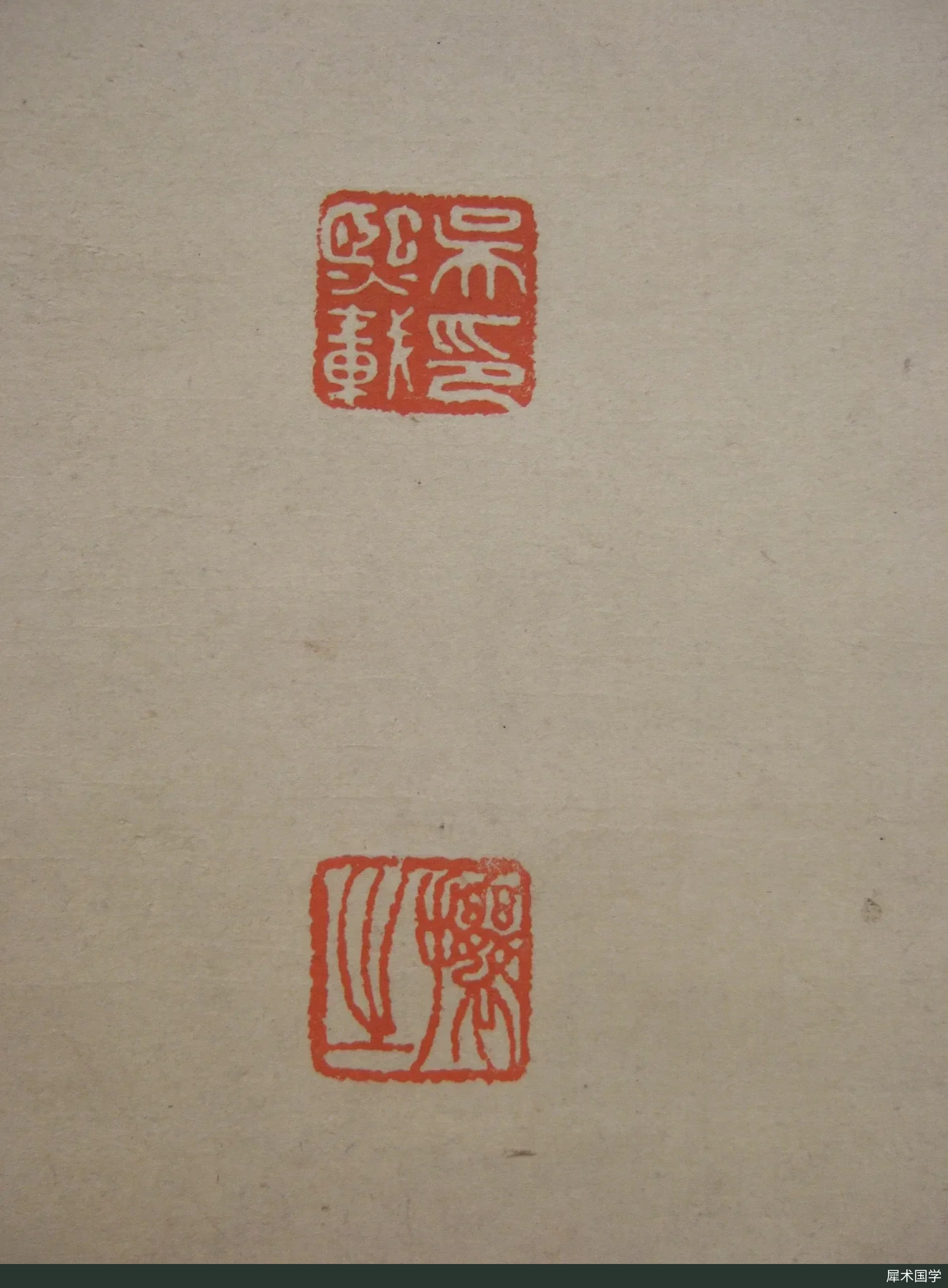
A section of a four-panel seal-script set of “The Southern Hill Has Tai,” from the Minor Odes of the Shijing, written by Wu Xizai in the Qing dynasty, ink on paper. The museum records it as made before 1862. The Metropolitan Museum of Art, accession 2010.327a–d. Source: Wikimedia Commons (the museum’s open-access file). License: CC0 1.0.
Fees, certificates, and items not yet checked
The “About us” page of Chinese University MOOC says learners can study the platform’s courses for free, while the user-service agreement also says the platform has both free courses and paid courses, and that certificate services are provided for a fee. None of the three course-introduction pages read this time marked a course price. Whether a fee is charged follows what the enrollment page actually shows. On the certificate note of the Hebei Normal University course page, a verified certificate requires real-name verification after the assessment standard is met, and an online paid application. Once the electronic certificate is generated, the fee is not refunded. Still not checked: the current session times of the Hebei Normal University and Xi’an Jiaotong University courses on Chinese University MOOC, the language of instruction of all three, and whether the Zhihuishu edition accepts an individual learner. This article did not log in and enroll.
References
- Introduction to the Shijing, Shandong University, Chinese University MOOC
- Introduction to the Shijing, national smart higher-education platform
- Introduction to the Shijing, Hebei Normal University, Chinese University MOOC
- Introduction to the Shijing, Zhihuishu
- Yi Weihua, head of the Chinese language and literature program, Literature Department, Huihua College, Hebei Normal University
- Reading the Classics, Xi’an Jiaotong University, Chinese University MOOC
- Reading the Classics, academic affairs, Xi’an Jiaotong University
- About us, Chinese University MOOC
- Chinese University MOOC user-service agreement
- All of the pages above were read on 2026-10-24.
- Xisi Guoxue.
- Compiled and published by Scholay. For a takedown request, send feedback.
- Also published at Enter Scholar.